
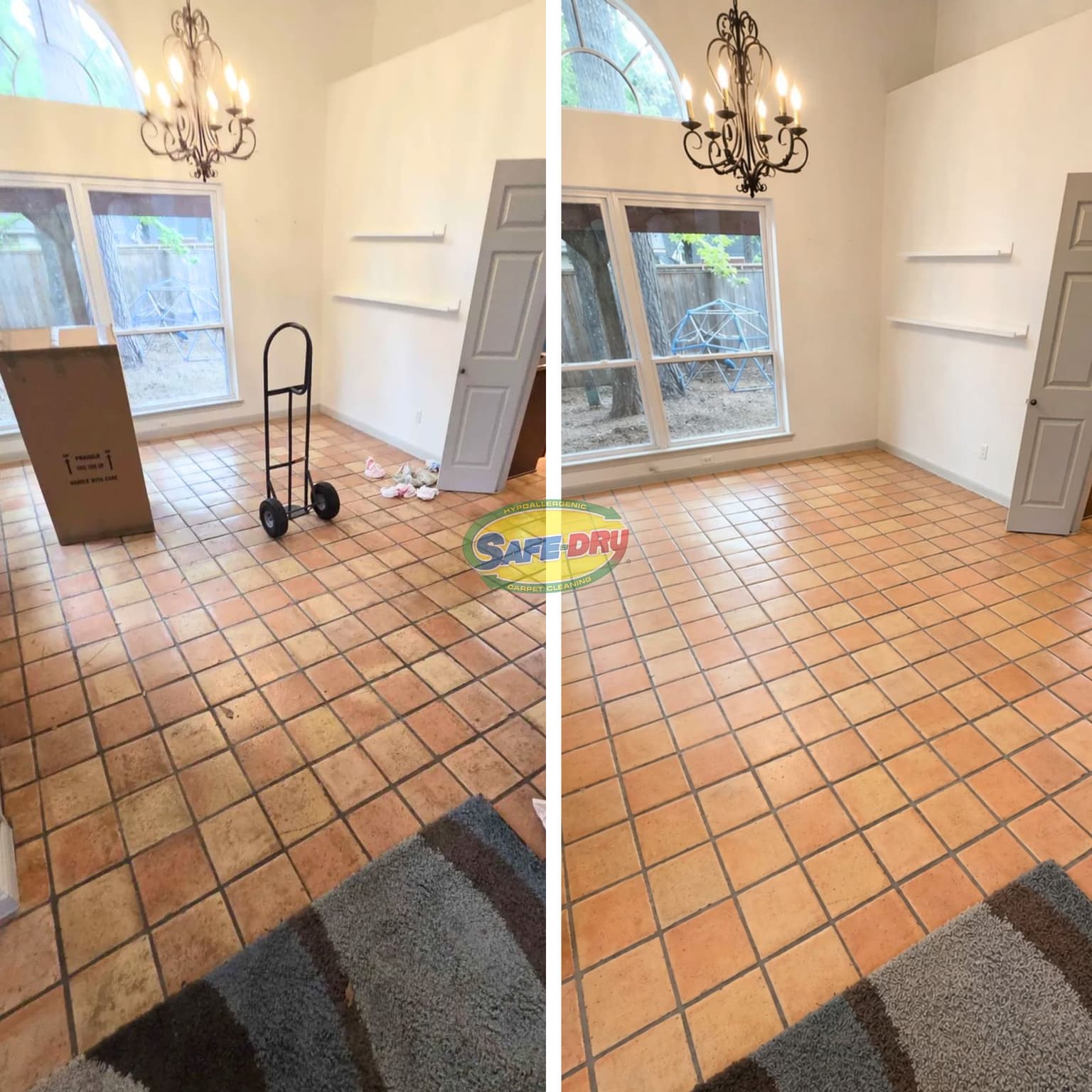
You can mop a tile floor every week for a year and the grout will still go dark on you. That's not a mopping failure. Tile is smooth and wipes clean; grout is porous and drinks. Oils, soap film, tracked-in soil, and moisture all soak into it, and once they're in, a mop just glides over the top.
The usual response is to reach for the strongest chemical in the store. That's the move we'd talk you out of. Harsh acids and heavy bleach can roughen grout and etch certain tiles, and rougher grout stains faster next time. You end up scrubbing more often with worse results. The safe path is quieter: figure out what the stain is, start mild, and remove what you loosen.
First, name the stain
Sixty seconds of looking saves an hour of scrubbing the wrong way. Dark lines along walk paths are traffic soil. A hazy, dingy look around showers and tubs is soap film. Chalky or crusty deposits near faucets are hard-water minerals. Yellow-brown grout near the stove is grease holding onto dust. Dark spotting in damp bathroom corners is usually mildew discoloration.
Wipe a small line with warm water and a microfiber cloth. If it lightens, you're dealing with surface soil and this will be easier than you think.
The safe sequence
Get the loose grit up first with a broom or vacuum. Grit under a wet brush scratches tile, and in Germantown's red-clay corner of the world there's plenty of it coming in on shoes.
Then work mild to strong, stopping as soon as something works:
- A pH-neutral tile cleaner, warm water, and a few minutes of dwell time before you touch it. Dwell time out-performs muscle.
- A medium-bristle grout brush, short controlled strokes along the line. An old toothbrush for corners. Never steel brushes or scraping tools, which gouge grout permanently.
- For grease zones, a degreasing cleaner, rinsed thoroughly afterward.
- For stubborn spots, a peroxide and baking soda paste, given an hour to work, then wiped clean.
The step people skip is the rinse. If dirty solution dries back into the grout, you've moved the soil around and added cleaner residue on top, and that film grabs new dirt within days. Rinse with clean water, swap the water when it clouds, and towel the floor dry.
One safety note that bears repeating: never mix cleaning products, and go easy with acids like vinegar. On marble, travertine, or limestone, acid etches the tile itself.
Keep it from coming back
Moisture is the repeat offender, especially in bathrooms. Run the exhaust fan 20 or 30 minutes after showers, squeegee the walls, and leave the door open so humid Mid-South air can move. Sweep the kitchen and entry tile a couple of times a week so grit never gets ground in. Wipe cooking splatter before it hardens into that yellow film.
When the grout has absorbed more than you can pull out
Deep, even discoloration across a whole floor means the soil is down in the pores, and no hand brush reaches it. That's the job our grout cleaning service was built for: a machine buffer that scrubs the tile and digs the embedded buildup out of the grout lines in one pass. Floors that homeowners assumed were permanently gray come back several shades lighter, and the weekly mopping actually works again afterward.
Tired of scrubbing the same lines every month? Hand the job to the buffer. Call 901-530-8370 or put your floor on our calendar and see what color your grout was supposed to be.