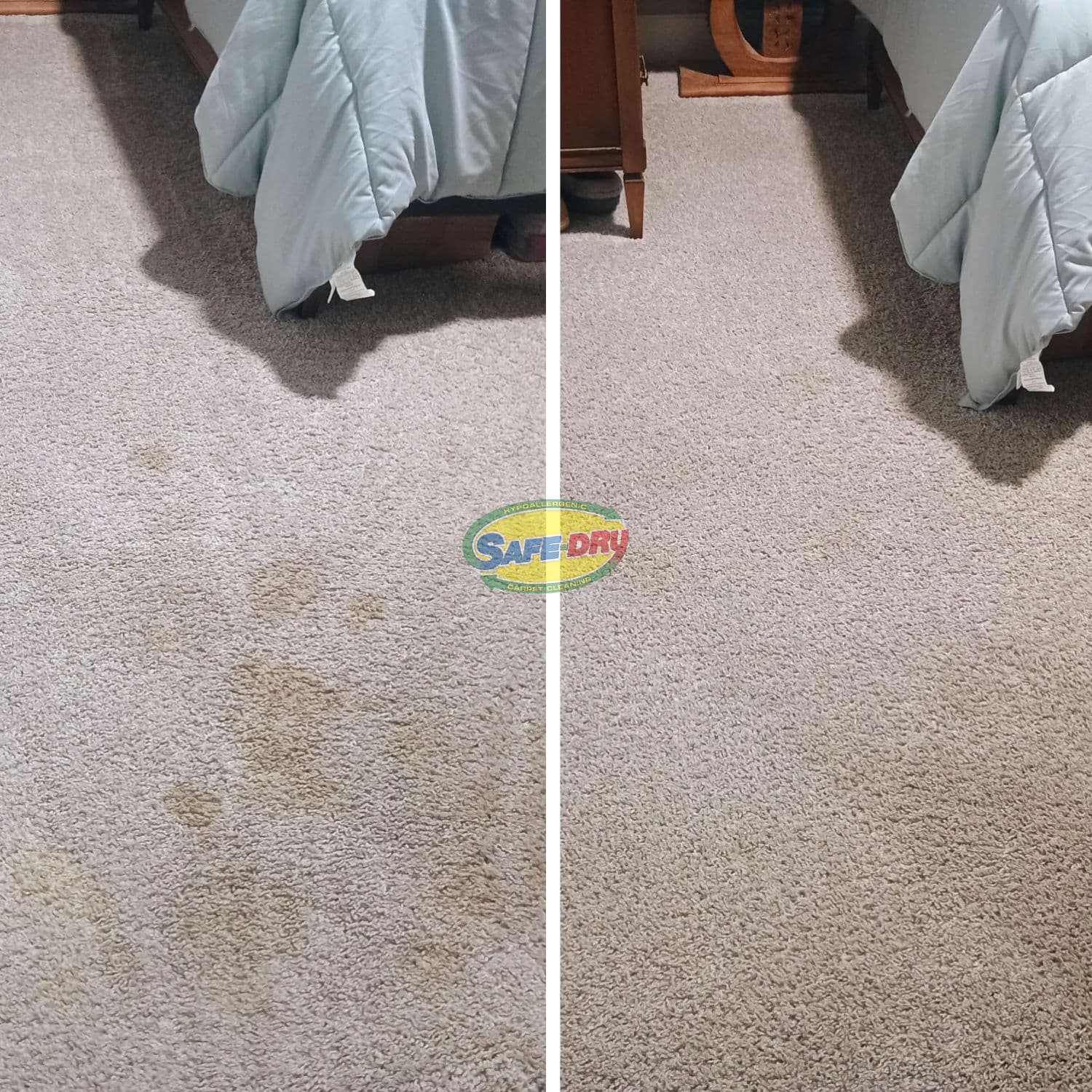
Store-bought carpet cleaners cost real money and half of them underdeliver. Meanwhile a handful of things already under your sink can knock out most everyday carpet problems, if you match the right one to the mess in front of you. That matching is what this post is about, because DIY carpet cleaning fails far more often from picking the wrong tool than from the tools being weak.
Two ground rules before you mix anything. Test every mixture on a hidden corner of carpet first, because dyes vary. And go easy on the liquid: damp the fibers, don't drown them.
Match the cleaner to the mess
Different stains have different chemistry, so start by identifying what you're up against.
Greasy or oily marks, think makeup, food grease, that mystery smudge by the couch, respond to dish soap. Two tablespoons of dishwashing liquid in a quart of hot water, worked in with a soft cloth and rinsed with cold water, cuts through oil the way vinegar never will. A sprinkle of baking soda first helps absorb the worst of it.
Drink spills like juice and coffee want club soda or a vinegar-and-water mix as a pre-treatment before anything stronger. Blot, apply, wait five minutes, blot again.
Pet accidents call for hydrogen peroxide or a proper enzyme product, since the smell comes from proteins that ordinary soap leaves untouched. The pantry version that works: spray on a half-and-half mix of white vinegar and water with a small squeeze of dish soap, let it soak, then sprinkle baking soda over the top and work it in gently with an old brush. Vacuum once dry. The vinegar neutralizes odor while the baking soda lifts what's left. For truly dug-in spots, rubbing alcohol dabbed on with a cloth is a sleeper pick.
Whatever you reach for, blot. Rubbing frays fibers and spreads the mess.
Four recipes worth taping inside the cabinet door
The all-purpose vinegar spray. One cup of white vinegar and two cups of warm water in a spray bottle. Spritz the spot, wait ten minutes, blot with a clean cloth. This is the workhorse for general stains on light and medium carpets. Stubborn spots may take two or three rounds.
The scrubbing paste. Stir roughly a tablespoon each of liquid dish soap and baking soda into a paste, spread it over grimy high-traffic patches, give it 15 minutes, then vacuum thoroughly. It degreases and deodorizes in one pass, which makes it the pick for the hallway stretch everyone walks a hundred times a day.
The overnight dry shaker. No patience for wet carpet? Combine half a cup of cornstarch with a quarter cup each of borax and salt in a shaker container. Sprinkle it over the problem area before bed and vacuum in the morning. The cornstarch pulls moisture and oils out while you sleep.
The five-minute deodorizer. Blend a quarter cup of baking soda with about ten drops of lavender or lemon oil, sprinkle it across the carpet, let it sit 15 minutes, vacuum it up. It clears that stale smell carpets develop without perfuming the whole house.
For a bigger stained area, a lighter cousin of the paste works as a shampoo: one tablespoon of dish soap shaken into two cups of warm water, misted on, blotted, vacuumed once dry. Keep the soap light. Oversudsing leaves residue that pulls new dirt in like a magnet, and getting foam back out of carpet is miserable.
Know your fibers before you commit
Synthetic carpet, nylon or polyester, tolerates every mixture above without complaint. Natural fibers are another story. Wool, cotton, and silk can shrink, bleed, or felt when hit with hot water or acidic mixes, so dilute further, keep the water lukewarm, and go gently. Unsure what you have? Dampen a hidden patch with plain water and a white cloth. If color transfers or the texture changes, treat the whole carpet as delicate.
And natural doesn't mean risk-free. Never mix ammonia near bleach-based products, wear gloves with the stronger blends, and think about who's in the house: vinegar smell bothers some people, and certain fragrance oils are hard on pets.
The three mistakes that sink DIY jobs
- Too much water. An oversoaked carpet can shrink, discolor, and grow mold in the pad. Use the least liquid that gets the job done.
- Wrong product for the fiber. A cleaner that's great on nylon can permanently dull a wool rug.
- Rushing. Skimping on dwell time, skipping the rinse, or quitting before the residue is out leaves a sticky film that re-soils in weeks.
Slow down, rinse well, and let everything dry with good airflow before furniture goes back.
Maintenance beats every recipe
The cheapest cleaning solution is a vacuum used often. Slow, steady passes once or twice a week keep grit from grinding into the pile, which means fewer stains ever get the chance to set. Add quick spot response and a mat at the door and you've prevented more damage than any mixture can undo.
And some messes simply outrank the sink cabinet. Old set-in stains, pet odors living down in the pad, whole rooms gone dull: those need real extraction, and there's no pantry recipe for that. It's where our carpet cleaning and odor and stain removal come in, with results we guarantee. When your homemade arsenal taps out, the pros at Safe-Dry of Germantown are one call away at 901-530-8370, or get in touch online.